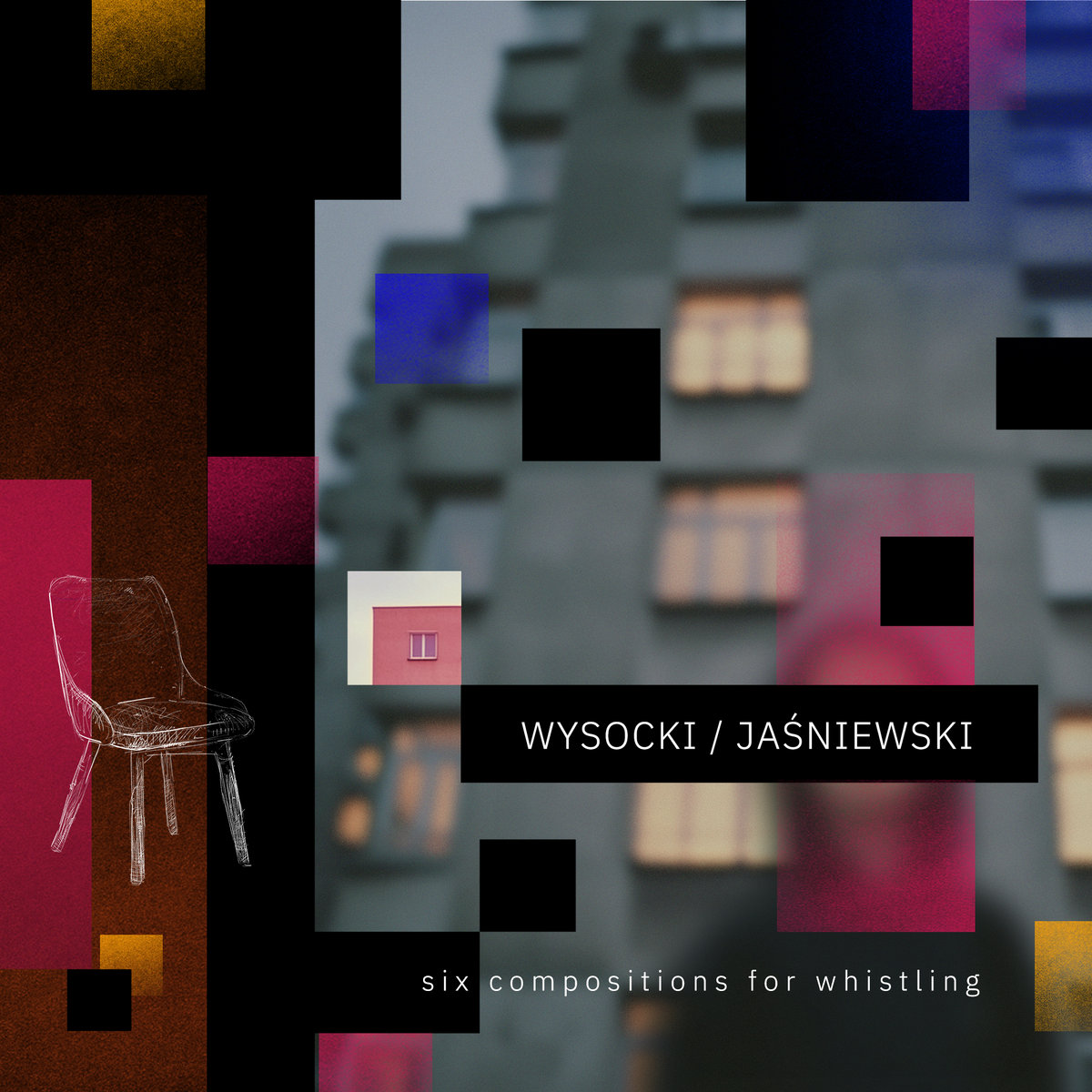
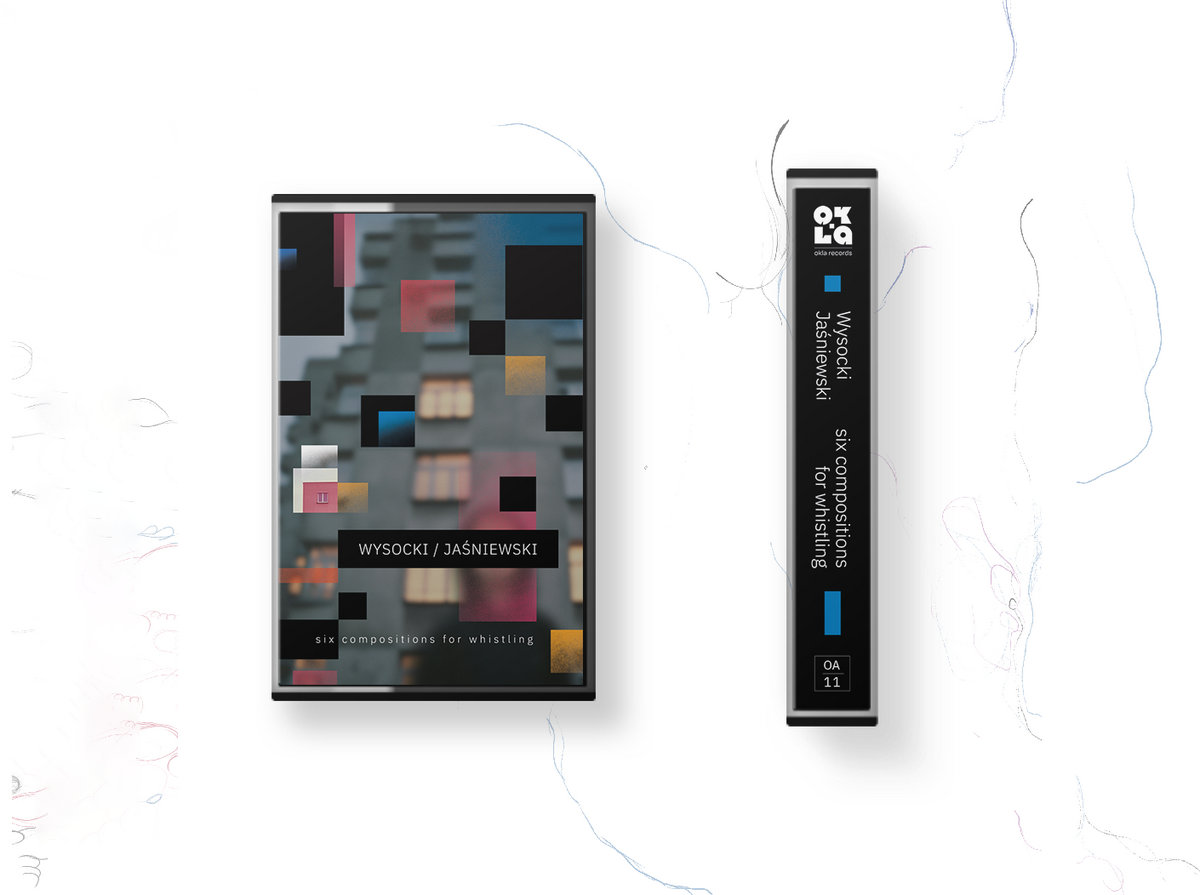
Wysocki / Jaśniewski 'Six Compositions for Whistling' MC OA 11
Info
From the outset, Mateusz Wysocki (also known by his artistic alias “Fischerle”) and Daniel Jaśniewski (“Genetics and Windsurfing”) play with your perception, presenting playful track titles like “Spectral Study of Slurping” on the surface, while, underneath, offering a collage of sound in the vein of musique concrète, updated for the modern world. They combine extreme, precise digital editing techniques with analogue rawness and unpredictability, mixing it all into a hefty pot to serve up a tasty, idiosyncratic soup of sound—if you will. Good to the last drop.
It begins haunted, pitch-black, writhing with a menacing gravity as hellish sirens rise and fall into the murk before morphing into a high-pitched rustling. Like an old-school point-and-click video game, you move through rooms and the atmosphere shifts—slightly but intensely—as a rumbly, maybe-drum devours the sonic space, trapping your attention. Another shift, and you drift, stop-and-go, a hundred sounds a minute, of unknown origin and form, leaping at you and then disappearing. Even the first track, “Sound Diptych ca. 2025,” contains multitudes, mysteriously ending with a chime like the bell of a boxing match. First round done—take a breather and get ready for the next.
Clinking utensils and fragments of conversation in “Spectral Study of Slurping” offer a glimpse into an everyday dinner scene devoid of context, playfully commenting on the track itself, as if hyping the audience for what’s to come. “To było coś”—“That was something.”
On “The Future Sound of Radzymin,” the duo transplant the twilight sound of London to a small town near Warsaw. Devoid of the wonky drums, it focuses on the droney, viscous sludge of sound, vying for your attention with every drop.
Sonic gold is mined from the washing machine of obscure tones as “Ode” transforms into a bright, rising buzz reaching toward the sky, while a crackling voice struggles to match it.
“Folk Song” for the dial-up generation presents a crunched voice splashed with the clatter of a slow-motion run-through of presets on your new soft synth. A cacophony of squeaks pits the natural against the unnatural, as birdsong is overshadowed by the clatter of a sulfurous computer orchestra on its dying power.
The album’s closer, “Hacked Duration,” is populated by the immutable thud of a string, its sonic quality too profound and grand to fit into the cables, processors, and speakers. It also seems transgressive in the context of the speedrunning transmutations of sound in the neighboring compositions.
“Six Compositions for Whistling” is a discordant entity playing by its own rules. You may need to get used to it, but it’s made with love. Slurping is encouraged.